
Sitting in Forgetting is a Daoist Meditation style which practitioners claim originated during the Chinese Warring States period (300 B.C.).
The earliest reference to Sitting in Forgetting was found in the 庄子南华经 Zhuangzi Nanhua Jing which says:
堕肢体,黜聪明,离形去知,同于大通,此谓坐忘。
“My limbs and body fall away, do I away with hearing and vision, I part with form, cast off knowledge and become one with the great connection (the Dao) this is sitting in Forgetting. “
Zhuangzi, Da Zong Shi chapter.
Although there is credible evidence that Sitting in Forgetting was practiced throughout the early Dynastic period the style became most prominent around 700 A.D. when it was further developed and promoted by 司馬承禎 Sima Chengzhen, a patriarch of the 上清派 Shang Qing Pai/Highest Clarity School of Daoism.
He wrote the 坐忘论 Zuo Wang Lun/Discussion of Sitting in Forgetting, the first text to emphasize a complete theory of the art.
Discussion of Sitting in Forgetting closely follows the principles of the Dao De Jing, for instance the text says:
无为则心自安。
Non Action causes the heart to be at peace of its own volition.
Zuo Wang Lun chapter on Breaking Attachments
And:
安在道中,名曰归根。守根不离,名曰静定。静定日久,病消命复。
Peaceful in the Dao’s center it is called returning to the root. Protecting the root without separation is called stable stillness. Stable stillness after enough time reduces illness and causes life to return.
Zuo Wang Lun chapter Contain the Three Hearts.
Both of these ideas are borrowed directly from the Dao De Jing and applied to seated meditation to describe its function and benefits.
Sima Chengzhen also wrote 天隐子 Tian Yinzi/The Heavenly Hermit where he explained the place of Sitting in Forgetting in his system of meditation.
He said:
易有渐卦,老氏有妙门。人之修真达性,不能顿悟,必须渐而进之,安而行之,故设渐门。一曰斋戒,二日安处,三曰存想,四曰坐忘,五日神解。
The Book of Changes has the “Gradual” Hexagram, the school of Laozi has the miraculous gate. When people cultivate reality and arrive at their nature they cannot achieve it suddenly. They must advance gradually, thus the gradual gate was established.
1: fast and abstain,
2: find a tranquil location,
3: contain the imagination,
4: sit in forgetting,
5: attain spiritual liberation,
Tian Yinzi, trans. Robert Coons
We can see here that Zuo Wang can be understood as part of a longer process of attaining spiritual liberation and is one of multiple practices done by Daoists and people who practice Daoist Meditation.
In later generations Zuo Wang was also frequently used in Internal Alchemy practice such as by Quanzhen founder 王重阳 Wang Chongyang in his 王重阳内修十论 Wang Chongyang Internal Cultivation Ten Discussions.
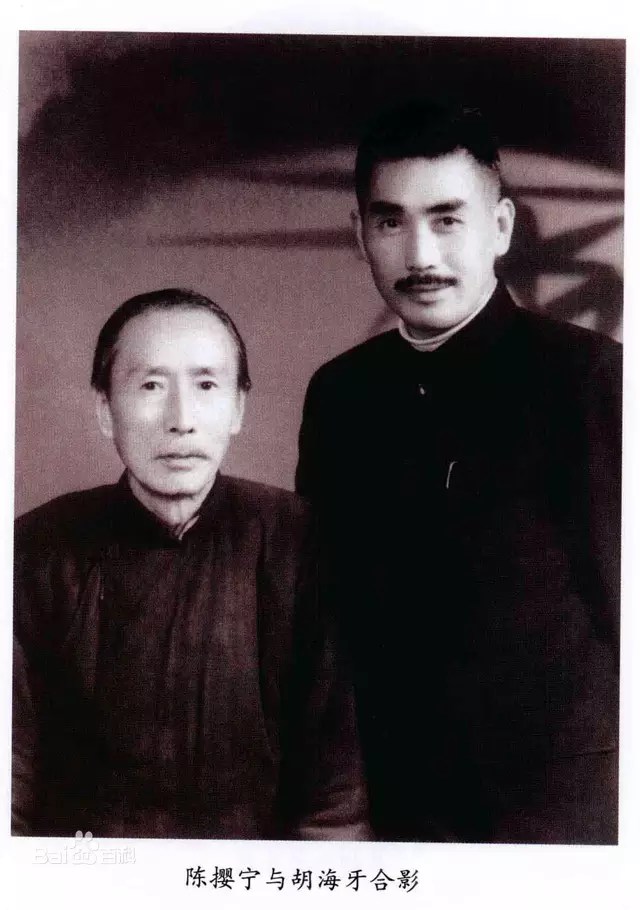
In the 20th century Immortality Study school founder 陈樱宁 Chen Yingning created the 庄子心斋法 Zhuangzi Xin Zhai Fa/Zhuangzi Heart Fasting Method, a standardized form of Sitting in Forgetting designed to help people maintain health and well-being.
He and his disciple 胡海牙 Hu Haiya also developed 听肤法 Ting Fu Fa/Listening to the Skin Method which uses principles of Sitting in Forgetting with whole body breathing practice to help people develop an improved sense of Qi both inside and outside the body.
Today Zuo Wang can be practiced either as a standalone system of meditation or as a rudiment to Internal Alchemy and is a potent and effective method of Daoist Meditation capable of improving Qi and realizing the intrinsic nature of spirit.
 Qigong Project