This is a beta page introducing a general history of Daoist Energy practices. It is still in progress and I am adding to it daily as well as working out bugs. The photos are not in proper order due to an issue with the software. This is an ongoing project, thanks for your patience.
Introduction
Daoist Qigong has over 2500 years of history and is one of the oldest families of Qigong in China.
Daoist Qigong mainly focuses on techniques done in meditative stillness which were defined by 20th century master Chen Yingning as 静功 Jing Gong/Stillness Skill.
History
500 B.C.
Early Daoism
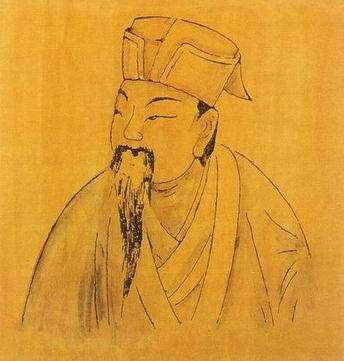
Daoism began with 老子 Laozi who wrote the 道德经 Dao De Jing.
His work advocated 虚心 Xu Xin/Emptying the Mind, 实腹 Shi Fu/Fill the Belly, and 致柔 Zhi Rou/Utmost Softness.
Collectively these and other ideas became the foundational theory of Daoist Qigong practice.
300 B.C.
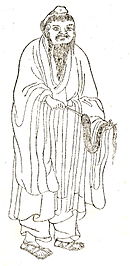
庄子 Zhuangzi was the second Daoist philosopher. He contributed to Qigong by cataloging contemporary practices such as 导引 Dao Yin techniques copying animal movements and 吐故纳新 Tu Gu Na Xin/Spitting the Old and Drawing in the new which people in later generations interpreted in the development of 吐纳 Tu Na breath work.
100 A.D.
The Celestial Masters
After dreaming of Laozi the Han Emperor Huan built a temple in which the 老子铭 Laozi Ming/Steele of Laozi was established. This Steele includes the earliest reference to the 丹田 Dantian/Elixir Field, an area in the body in which Qi collects and forms 金丹 Jin Dan/Golden Elixir which is said to cure disease and allow people to attain 长生久视 Chang Sheng Jiu Shi/Longevity and Wisdom.
The 天师道 Tian Shi Dao/Way of the Celestial Masters movement began in 142 A.D.
The Celestial Masters were the first organized Daoist clergy and various members including 葛玄 Ge Xuan and 葛洪 Ge Hong recorded important ideas such as elaborating on the theory of the 三田 San Tian/Three Fields, an essential idea in Qigong culture.
Ge Hong also advocated the 胎息 Tai Xi/Embryonic Breathing method of Meditation which would go on to be incorporated in many Daoist and Chinese Medicine practices.

300 A.D. The 上清派 Shang Qing School
The Shang Qing School
In 364 魏华存 Wei Huacun (Lady Wei) founded the 上清派 Shang Qing School of Daoism which focused on 存想 Cun Xiang/Visualization methods to achieve energetic connection and spiritual liberation.
The Shang Qing school mainly focused on visualizing deities within the organs of the body as a means to nourish their Qi.
The 黄庭经 Haung Ting Jing/Yellow Court Classic was written by Lady Wei and is a representative Qigong text of early Daoism which emphasizes visualizing body deities, the Lower Dantian (called the Yellow Court) and swallowing saliva for medical benefit.
The Yellow Court Classic was important for further developing the concept of Dantian and Qi Circulation in the organs in Daoist Qigong practice.
500 A.D.
灵宝派 The Lingbao School
The Lingbao School of Daoism was founded by 葛巢甫 Ge Chaofu, the grandson of 葛洪 Ge Hong.
The Qigong methods of this school include visualization of celestial bodies such as the sun, moon and constellations entering the body of the practitioner.

陶弘景 Tao Hongjing
Tao Hongjing was a Daoist and Chinese doctor who advocated 导引 Dao Yin and 吐纳 Tu Na practices in his text 养性延命录 Yang Xing Yan Ming Lu/The Record of Nurturing Nature and Extending Life.
This text was influential on multiple areas of Qigong including Daoist, Chinese Medicine and Modern with each school having slightly different interpretation of his work.
The text clarifies the two aspects of Tu Na breathing as sounding exhalation and breath holding to obtain different medical benefits.
600 A.D.
孫思邈 Sun Simiao
Sun Simiao was a Daoist and doctor who developed multiple forms of Qigong and Meditation including visualization, self massage, and Dao Yin. His essay on 气法 Qi Fa/Qi Methods is one of the most complete methods of medieval Daoist Qigong. He was also a pioneer of apophatic Meditation on the Lower Dantian and established the idea of 胎息定观 Tai Xi Ding Guan/Embryonic Breathing in Stable Concentration which was an improvement over earlier methods of Embryonic Breathing advocated by the Ge family.
Sun also forwarded the idea of a measurable process of realization which he called 五时七候 Wu Shi Qi Hou/Five Times and Seven Periods. This system of thought tracks practitioners in their progress through each stage of meditation and would eventually be elaborated on and replaced by the internal alchemy system.
司馬承禎 Sima Chengzhen
Sima Chengzhen lived between 647–735 and was a well known court Daoist of the Shang Qing School.
He is best known for the 坐忘 Zuo Wang/Sitting in Forgetting tradition of meditation which places emphasis on using emptiness and stillness to merge practitioners with the Qi in the outer environment.
His most well known text is 坐忘论 Discussion of Sitting in Forgetting, but a more accessible text for Daoist learners is 天隐子 Tian Yinzi/The Heavenly Hermit, a document that synthesizes Zuo Wang with earlier techniques of visualization and self massage.
800 A.D.
呂洞賓 Lu Dongbin
呂洞賓 Lu Dongbin was a minor official during the Tang Dynasty who put forward the first major theory of 内丹 Neidan/Internal Alchemy Meditation.
His poem 吕祖百字碑 Lu Zu Bai Zi Bei/Ancestor Lu’s Hundred Character Ancestor Steele emphasized the use of 为无为 Wei Wu Wei/Acting in Non Action as the means to 养气 Yang Qi/Nurture Vital Energy.
Lu’s work revolutionized Daoist energy practices through the use of meditative apophysis (self negation in stillness) as a primary method of generating Qi and cultivating spiritual realization.
Mixed Schools
After the time of Lu Dongbin there was a 200 year period in which the theory of the Golden Elixir was not clearly fixed. This era of practice is known as the 金丹大道 Jin Dan Da Dao/Great Way of Golden Elixir Period and is typified by great diversity of practice methods. Famous figures from this time such as 施肩吾 Shi Jianwu and 陈扑 Chen Pu forwarded unique and complex theories about how to generate and circulate Qi in the body which were often based on combining older methods of Daoist Qigong such as 闭气 Bi Qi/Breath Holding and 存想 Cun Xiang/Visualization. Today these methods are not considered internal alchemy by most scholars but instead are viewed as a separate lost transmission of Daoist energetic practice. Today there are several masters in China claiming to come from this tradition as well as claiming a lineage relationship with Lu Dobgbin.
1000 A.D.
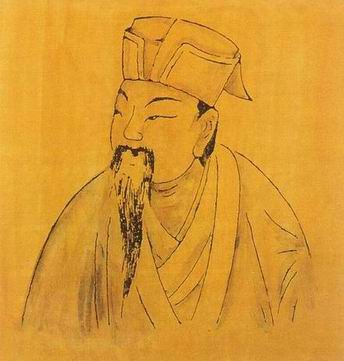
張伯端 Zhang Boduan
Zhang Boduan founded the 内丹南派 Nei Dan Nan Pai/ Southern School of Internal Alchemy which is based on the principle of 先了命后了性 Xian Liao Ming, Hou Liao Xing/First Attain Innate Energy, then Attain Innate Nature.
This approach to meditation starts by cultivating 先天一炁 Xian Tian Yi Qi/The One Qi of the Pre Heaven in order to circulate the circuit of the 小河车 Xiao He Che/Lesser River Wheel. Later in practice it is possible to generate the 大河车 Da He Che/Greater River Wheel and eventually 炼性 Lian Xing/Refine Innate Nature by 面壁九年 Mian Bi Jiu Nian/Facing the Wall for Nine Years.
The ultimate goal of the Southern School is to realize harmony with the Dao after the refinement of Innate Nature is complete.
1100 A.D.
王重阳
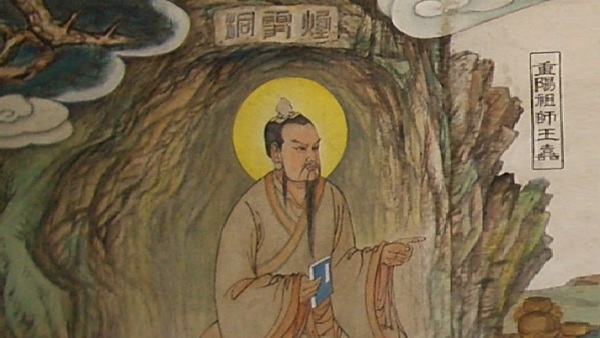
Wang Chongyang was the founder of the 全真教 Quan Zhen Jiao/Complete Reality School of Daoism and a proponent of the Northern School of Internal Alchemy.
His practice combined elements of 禅宗 Chan Zong/Chan Buddhism with Daoism and established the doctrine of 先了性,后了命 Xian Liao Xing, Hou Liao Ming/First Achieve Innate Life Energy, Then Achieve Innate Nature which is based on realizing mental stability and meditative focus before cultivating Qi.
Wang had seven disciples, the most famous among them were 马丹阳 Ma Danyang, 孙不二 Sun Buer and 丘处机 Qiu Chuji.
1200
李道純 Li Daochun
Li Daochun lived in the 13th century and created the Daoist Middle School of Internal Alchemy. His approach uses the theory of Neo Confucianism to explain Daoist practice and is a combination of Zhang Boduan’s Southern School and Wang Chongyang’s Northern School.
The main skill emphasized by the Middle School is 玄关一窍 Xuan Guan Yi Qiao/The Single Opening of the Mystery Gate, a Pre Celestial form of practice in which deep meditation produces an increase in Pre Natal Qi which floods the Post Natal environment producing increases in awareness similar to 见性 Kensho in Japanese Zen Buddhism.
1200 – 1900
Advances in Internal Alchemy and Daoist Qigong
During the next several hundred years both Internal Alchemy and Daoist Qigong made great advances with multiple representative schools appearing in the Alchemy genre.
Famous schools in this era include 中派 Zhong Pai/The Middle School ,东派 Dong Pai/the Eastern School ,西派 Xi Pai/the Western School,伍柳派 Wu Liu Pai/the Wu Liu School.
Each School advocated different theories of Internal Alchemy while retaining broadly the same structure of practice.
During this time Daoist Qigong did not experience great changes to its theory or any new schools of thought, but many more combinations of Dao Yin, Tu Na, Visualization and even Internal Alchemy appeared.
Some interesting texts from the period include 养生类要 Yang Sheng Lei Yao/The Key to the Genres of Nourishing Life, 陆地仙经 Lu Di Xian Jing/The Classics of Immortals who Reside on the Earth, 古书隐楼藏书 Gu Shu Yin Lou Cang Shu/Collection of Ancient Books From the Tower of the Bookish Hermit, all of which contain interesting collections of Daoist Qigong techniques arranged in routines which would go on to have an effect on the formation of modern Qigong.
20th Century:
The 20th century saw the rise of the New Learning movement in which Chinese philosophy, science and cultural thinkers sought ways to modernize by adopting ideas from modern science imported from the West.
This led to a brief modernist Daoist movement spearheaded by 蒋维乔 Jiang Weiqiao who wrote the meditation text 因是子静坐论 Yin Shi Zi Jing Zuo Lun/Master Yinshi Discusses Sitting in Stillness.
The text emphasizes the replacement of ancient metaphysical ideas like Yin and Yang and the Five Elements with modern ones borrowed from physics and biomedicine.
The text although popular was received poorly by Daoists because it overlooked a number of key features of Daoist Meditation such as Pre Heaven Qi.
Around the same time the meditation master 赵避尘 penned the text 性命法诀 The Method Formula of Nature and Life which discusses elements of the pulmonary, circulatory and nervous systems in relation to Internal Alchemy and eclectic Dao Yin practices.
 Qigong Project