TCM Qigong is a system of medical practice which serves the dual purpose of treating illness and maintaining health.
TCM Qigong theory is essential to correct practice since in order to correctly treat an illness a practitioner must understand the patient’s illness and how to best use Qigong to assist in the healing process.
This article is about TCM Qigong Diagnostic Techniques.
Although we can’t talk about everything here we can discuss the most important basic principles and practices.
The Principles of TCM Qigong Diagnosis
Below we will briefly discuss the most important theoretical principles of TCM Qigong so you can understand its purpose and how it is applied.
A more complete understanding of the genre will be included in future courses we plan to offer on the use of Qigong in Chinese Medicine.
1: 诊断 Zhen Duan/Diagnosis
Tradutional Chinese Medicine Qigong practitioners must have sufficient diagnostic skills to assess and understand their patient’s illness conditions.
The diagnostic methods of TCM Qigong are the same as those used by TCM Herbalists and Acupuncturists.
Common diagnostic methods involve the differentiation of:
阴阳 Yin Yang:
TCM Qigong practitioners observe changes in Yin and Yang in the bodies of their patients. Yin and Yang are not physical characteristics but instead mutually interacting opposites which can present as rest and activity, cold and heat, laxity and stiffness etc…
五行 Wu Xing/Five Elements:
The Five Elements are Yin and Yang mixed together in specific ways and are used to understand not only characteristics of illness but also many aspects of anatomy and physiology.
The Five Elements are correlated with many different functions, included here is a list of some of the most important ones pertaining to TCM Qigong:
Water: Cold, Kidneys, Containment of Qi,
Wood: Warming, Liver, Rising of Qi,
Fire: Hot, Heart, Expanding Qi,
Earth: Level, Spleen, can Rise or Descend,
Metal: Cool, Lungs, Collecting Qi,
The Five Elements mutually change according to natural cycles and can follow several patterns including generation, controlling, and cosmological.
These patterns describe many phenomenal changes in the body and health.
The Five Element aspect of TCM Qigong Diagnosis relates to finding the imbalances that cause illness in order to identify solutions.
There is much more to say about this subject and in future we will include a more detailed synopsis elsewhere on the site.
八刚 Ba Gang/Eight Syndromes:
The Eight Syndromes are the main theory modern TCM uses to diagnose illness.
They exist as four pairs which are:
1: 阴阳 Yin Yang/ the relationship of Yin and Yang in the body indicate health and illness.
2: 表里 Biao Li/Interior and Exterior:
TCM diagnostic techniques such as pulse taking, observing the face and tongue, listening to a patient speak, illness inquiry and so on may inform us about the relative depth of an illness and whether it is more Exterior (superficial) or Interior (deep). This can inform practitioners about the severity of an illness.
3: 虚实 Xu Shi/Vacuity and Repletion:
The body can be at relative levels of emptiness or fullness that may indicate signs of illness. Vacuity and Repletion often happen at the site of acupoints and meridians indicating a problem both locally and at the origin point of illness.
4: 寒热 Han Re/Cold and Heat:
Signs of heat and cold on the body show practitioners important points about the nature of illness treatment protocols.
六邪 Liu Xie/Six External Pathogens:
While the Eight Syndromes show us the condition of an illness the Six Pathogens tell us about its etiology (cause).
The Six Pathogens are Six externally occurring natural factors which cause illness in the body, although they are also sometimes used to discuss internal factors as well.
They are:
1: cold: cold causes tension, stiffness, and other similar issues. Consider how you feel when exposed to very cold weather without sufficient clothing and you may begin to better understand cold pathology. Cold can also manifest as fever with no sweating.
2: heat: heat causes sweating, a sense of increased temperature, and other similar issues. The most classic heat condition is a fever with sweating.
3: damp: Damp causes sluggishness, pain with a sense of heaviness, and often joint pain. Rheumatoid arthritis is an example of an illness often caused by internal dampness.
4: dry: dryness manifests as a lack of fluids. A parched mouth and throat during fever with no expectoration is a sign of dry.
5: wind: wind causes shaking such as tremors experienced with neurolo degenerative diseases among others.
6: fire: fire manifests as extreme heat.
The descriptions above are only general since there are many Chinese Medicine resources online.
I like this site:
http://www.shen-nong.com/eng/principles/whatsixevils.html
四诊 Si Zhen: Four Diagnostic Techniques:
The four diagnostic techniques are four active methods used to understand the principles of illness according to syndrome and pattern. They are:
1: 望 Wang/Observe: observing the patient with the eyes to recognize pathogenic changes in appearance.
2: 闻 Wen/Listen: listen for changes in patients voice, affect, cough etc…
3: 问 Wen/Ask: question patients about their symptoms.
4: 切 Qie/Palpation: feel the body surface and take the pulse to understand illness characteristics.
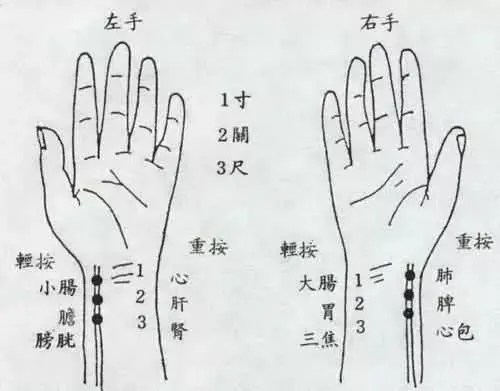
脉诊 Mai Zhen/Pulse Taking:
Pulse taking is one of the most important methods of TCM Qigong Diagnosis since it tells us an accurate account of the illness pattern and syndrome according to all possible modes of diagnosis.
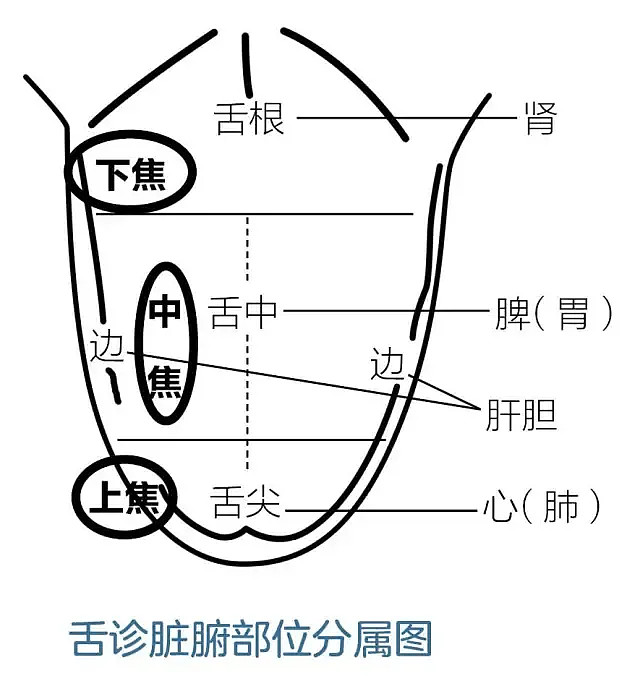
舌诊 She Zhen/Tongue Diagnosis:
This form of visual diagnosis tells us about the condition of the inner body and its organs and is one of the most accurate forms of TCM Qigong Diagnosis.
Summary:
Although it is possible to learn Qigong without knowing diagnosis, it is required to issue a prescribed practice for Healthcare.
The above article was only a general introduction to TCM Qigong Diagnosis and there is much more to learn which we will discuss in future articles, videos and courses.
 Qigong Project