TCM Qigong is a unique medical approach to practice with multiple methods for treating and preventing illness.
TCM Qigong is split into two approaches:
1: 养生气功 Yang Sheng Qigong/Prevention Qigong:
The Chinese Medicine Classic 内经 Nei Jing/Internal Classic says 上医治未病 “the greatest doctors regulate illness before it becomes severe.” This principle describes the Chinese Medicine approach to prevention since it indicates that most people already have some illness factors present in their bodies before they become ill and that it is the job of a physician to discover them and use preventative medicine to stop them from becoming serious.
TCM Qigong Prevention practices are one of the best ways to strengthen the body against illness by circulating Qi and Blood, stretching and toning muscles, opening the joints, calming the mind and more.
Preventative methods of practice are usually performed as sets of movements and postures in a “form” which can practiced every day.
Prevention methods such as 八段锦 Ba Duan Jin/Eight Silk Brocades are used to promote mobility, flexibility and circulation and can assist in controlling blood pressure, stress and pain among other conditions.
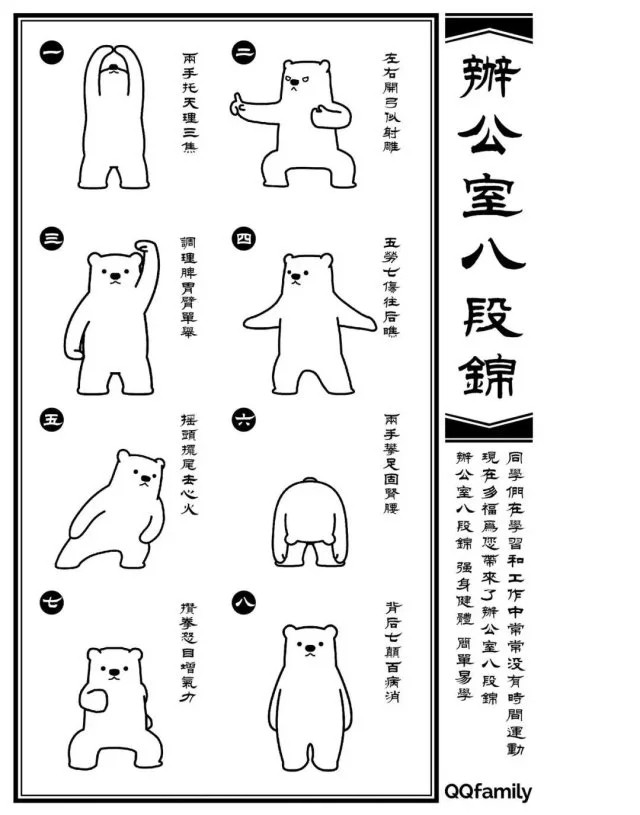
Prevention practice in TCM Qigong is identical to other modern schools of Qigong and does not require you practice a special medical method. However an understanding of TCM Diagnosis can help adjust practices to suit your needs.
2: 气功疗法 Qigong Liaofa/Qigong therapy:
Qigong therapy is designed to treat specific illnesses according to Traditional Chinese Medicine theory.
This includes:
– Diagnosis:
To be practiced as medicine TCM Qigong practitioners must accurately understand illness Patterns, Syndromes and Diseases.
Diagnosis is performed according to the principles of Traditional Chinese Medicine which you can read about here:
– Prescription:
After a successful diagnosis is made the practitioner must decide which practices are best suited to the patient’s illness.
These could include 导引 Dao Yin/Leading and Stretching, 吐纳 Tu Na breathing, 按摩 An Mo/Massage etc…
The practitioner must successfully decide which the method of 补 Bu/Tonify, 泻 Xie/Drain, 疏 Shu/Dredge, 平 Ping/Balance, or 活 Huo/Liven are appropriate and established practices based on the correct principle.
The relationship between prescription and diagnosis is essential to TCM Qigong creating the desired effect and without correct analysis its healing functions will be compromised.
– Adjustment of program:
调方 Tiao Fang/Adjustment of Prescription is a basic principle of Chinese Medicine in which practitioners observe the results of their Prescription and make adjustments relative to the change in illness pattern of their patients.
TCM Qigong uses the same principle since patients have different reactions to prescribed practices and must have them adjusted to better serve their needs
Summary:
TCM Qigong uses Prevention as its first line of defense against illness.
Diagnosis, prescription and adjustment are used if a patient exhibits signs of illness.
TCM Qigong is frequently used by acupuncturists and TCM Practitioners to supplement their medical treatments and so patients can extend the benefits of a TCM treatment even when they are not in clinic.
TCM Qigong when done according to its core principles is safe, effective and easy and can be integrated within multiple medical contexts.
There is an increasing body of medical research indicating that Qigong is beneficial to health and can be used successfully as a therapeutic medium to assist in the healing process of many illnesses.
 Qigong Project