Today’s article is about the 道体 Dao Ti/The Body of the Dao.
Dao Ti is an important concept mentioned in various texts and refers to the nature of the Dao.
It is often used in conjunction with the term 体用 Ti Yong which means body and use, we’ll get into that in a future article.
The Little Immortal says:
“道体”是无形无相,人人都有的先天本质“ “The Body of the Dao is formless and without a counterpart, it is the pre-heaven root essence of all people.”
Maybe you fluent Chinese readers can tell me if I made any mistake in my use of grammar, I don’t write in Chinese very often outside of sending messages to my Taiji teacher on Weixin so I wouldn’t be surprised if my grammar has some mistakes.
Let’s look at the idea a bit:
The idea of the body of the Dao doesn’t literally mean a body like the physical ones we have, but instead it refers to the nature of the Dao.
When we think of the Dao’s nature we should view it as relative to the use of the Dao.
That is to say that although the use of the Dao is in its power to generate Pure Yang Energy in the Universe and thus bring things into being, the body of the Dao is void, without form, without image, and non dual. In other words, the special theory of Daoism is that something which is suspended in the absolute of non-being can generate all being.
Internal Alchemy practice understands this as being the capital from which we derive our primary nature and physical bodies as well as all other things which make us exist and be aware of our existence.
In practice this doesn’t just mean we are chasing after non-being, but instead that we want to use the non-being of the Dao as part of a cycle of original generation that can actually allow us to be more complete.
This is a subtle lesson of Internal Alchemy and is predicated on the idea that although the Dao favors non-existence, the immortals view existence as precious, thus they use the power of the Dao in meditation to recreate the original circumstances of the life of the Universe within their own bodies.
This is why old texts often disparage practices like Dao Yin and Breathwork since they only work on the Post-Heaven body and mind rather than our original nature.
It isn’t that those practices are bad, actually they are part of a healthy life and can improve our physical situation greatly, but in terms of cultivating the Yang Spirit and making our energy become more mature and more permanent, we need to also realize the original nature of void non-being so the Dao can do its work.
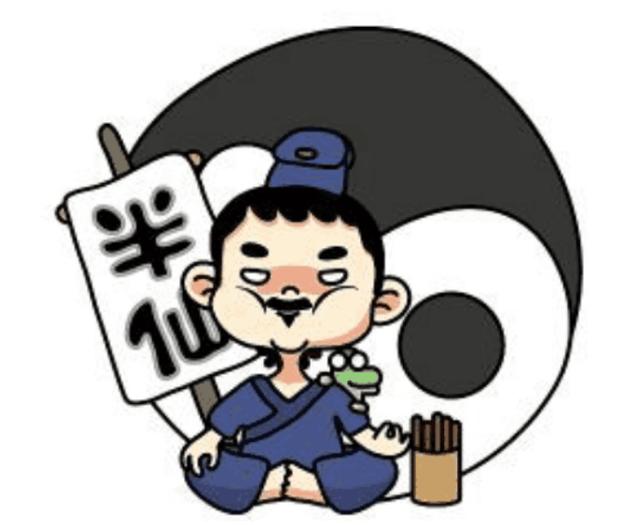
A 半仙 Ban Xian/Half Immortal is a fake Daoist who uses divination and Qigong as a way to trick people into giving them money. This article is about how to understand the real benefits of Qigong so you don’t get tricked by people like this.
Qigong masters make many claims about what the practice is and where its value lies, but with all the conflicting information it is hard to know exactly what the point of the art is. In this article you will learn what Qigong is and what the utility of each genre offers to practitioners.
1:Introduction: Qigong is not one system
Qigong has many styles including Eight Silk Brocades, Five Animal Performances, Zhineng Gong, and much more and it seems like each style makes its own claims and has its own unique theory, but what exactly does all this diversity mean? Are the differences between styles just superfluous or is there something more there?
1a:genre is more important than style
The idea of a style of Qigong is downstream from a genre since it is the genre that defines the style.
A genre is defined by the Oxford Dictionary as “a category of artistic composition, as in music or literature, characterized by similarities in form, style, or subject matter,” as such Qigong genre is best understood as a category of expression of certain principles and practices expressed within the unique parameters of Qigong study.
Qigong has 7 main genres:
Daoist Qigong: practices used to cultivate inner energy or create spiritual experiences, mainly through static breathwork, limited movement and internal meditative focus and visualization, mantra and mudra.
Medical Qigong: therapeutic methods involving movement, breath work and focus used according to Chinese Medicine and Biomedical principles to treat illness and maintain health.
Buddhist Qigong: varying practices used to promote physical health or invoke spiritual traditions depending on tradition. Often similar to Daoist Qigong but arguably obtaining influence from Vajryana practices originating in India.
Martial Qigong: methods designed to strengthen the body, recover from training tiredness and injury, and improve internal pliability, circulation, alertness, ability to sustain physical and psychological stress etc…
Modern Health Qigong: any combination of Qigong exercises from other genres used to promote physical and psychological wellbeing. Specifically promoted by the Chinese government between 1950s-1990s.
Modern Sport Qigong: Qigong Daoyin routines promoted by the Chinese department of Sport as health exercises and competitive sport, popular since early 2000s.
Folk Qigong: eclectic practices passed down in folk either through family lineages or student teacher relationships, also often a mishmash of exercises from books, television, prescribed by therapists etc…
Now that we know the basics of the genres of Qigong let’s look at styles:
1b: Qigong styles cross genre boundaries
Making a basic interrogation of popular Qigong styles we can see that many comfortably exist in more than one genre at a time.
Looking at a few of the most popular styles of Qigong may help us understand how this phenomenon works:
Eight Silk Brocades: This Dao Yin style is used by the Chinese department of sport as one of its basic Qigong programs and has also been extensively used in Chinese Medicine Qigong as well as being adopted to Yang Style Taijiquan as a basic Neigong stretching programs. Its utility is stretching and opening the body while lightly influencing the Meridians, Channels, blood and Qi flow and it can be used for purposes of prevention, stretching, rehabilitation etc…
Yi Jin Jing: The Sinew Changing Classic has been used variously in Chinese Martial Arts and modern Sports Qigong as a body opening and deep stretching programs although its roots are in Daoist and Buddhist energy cultivation techniques.
Zhineng Gong: Zhineng Gong is a modern system which combines elements of preventative medical Qigong with energetic and spiritual elements in an attempt to promote a Qigong oriented holistic lifestyle practice.
We can see that although Qigong may be associated with a particular genre (IE: Yi Jin and Martial Arts) its application can cross genres and still maintain utility.
This is because of the inherent nature of Qi circulation in the human body.
Indeed our Qi does not cease circulating when we are not practicing Qigong, we simply might not notice it is we are not already sensitive.
1c: The benefits of Qigong are mostly holistic in nature
in accordance with the principle of genre crossing we can confidently state that since the benefits of Qigong apply across multiple contexts it is a holistic approach to lifestyle and body mind regulation.
In this sense we can now provide a basic answer about the value claims of individual Qigong teachers, since their claims should be viewed through the lens of multipurpose utility rather than specific individual purpose utility.
1d: Genre and style are still important considerations in evaluating the purpose of Qigong
even so, a person wishing to have a spiritual experience is better suited by spiritual or religious Qigong practices which emphasize realization of inner stillness, void and emptiness, visualization of energetic and cosmic elements, and deep nourishment of the brain and inner organs.
Pure Dao Yin practices such as the Eight Silk Brocades may be less useful in this context, but may be more useful in the context of pre-exercise stretching, rehabilitation of chronic injuries, staying limber etc…
Knowing this is how to select practices appropriate for you and your clients and it is the reason why modern Qigong systems such as Da Yan, Zhineng, Guo Lin, Taiji Shi Ba Shi and other methods incorporate a combination of Dao Yin stretching, Breath Work, Inner Meditation, Visualization and other practices in their regimens.
In this sense modern Qigong is systematic in nature while many medieval methods are focused on genre specific results.
Because of the need to create holistic systems it means that as long as you know what to look for and understand quality of methods and theory there is no big difference between most of the modern health systems with most of the differences being subtle things that only really matter to advanced practitioners.
The same is not true of modern sport systems since they are almost exclusively based on Dao Yin and have very limited utility beyond the physical aspect of practice.
2: Value, branding, and claims
Where it gets tricky is how to appraise the claims of modern Qigong masters when they discuss the merits of their systems compared to others.
The reason why we created Qigong project is to fight back against the toxicity of the Qigong community in which masters and their disciples spready misinformation in order to promote their own worldview and make more money.
Typically there are two types of value claims in Qigong:
Benefits of practice,
Spiritual claims,
Let’s look at them in more detail:
2a: Benefits claims
Benefits of practice are those benefits that may accrue to a person who performs Qigong exercises.
They might include reduced stress, lowered blood pressure, improved mental focus, relaxes muscles etc…
Almost all Qigong styles can objectively claim most of the basic health benefits of Qigong with the exception of extreme practices such as hard martial styles which may worsen certain chronic health conditions as a result of overuse of forceful breathing practices etc..
Generally the benefits of Qigong practice can be understood as follows:
Dao Yin: opens the body, stretches connective tissue, relaxes muscles, improves strength and flexibility, stimulates blood flow and Qi circulation, can be used in synch with intention practice to stimulate Qi movement to specific areas, has preventative, rehabilitative, and even some minor fitness benefits.
Breath Work: improves lung capacity, Qi and blood circulation, relieves muscle tension, improves felt sense of Qi in the core and limbs, can reduce certain types of chronic pain etc…
Visualization: causes strong Qi sensations, can target specific places which are hard to get at with conventional Dao Yin and Breath Work, can cause spiritual experiences in certain contexts, may connect inner body to outer environment etc…
While there are other benefits and other types of practice this is a good basic list to give an idea of what realistic claims about Qigong benefits look like.
Some Qigong masters claim to be able to shrink tumors, cure terminal diseases and perform miracles. These claims are almost always fraudulent and make up many of the toxic elements of the Qigong community and its claims.
Many people have refused medical treatment believing that Qigong practice could save them and ended up becoming sicker or even dying. This is a really tragic outcome of greed and ego on the part of those fraudulent masters and is a value claim which can be rejected without a second thought.
2b: Spiritual claims
Spiritual claims in Qigong fall into several categories, but basically they are:
psychological,
religious,
new age and occult,
Psychological claims about Qigong typically involve the claim that Qigong can be used to create a sense of mental peace and balance and are usually perfectly legitimate claims of the actual utility of Qigong practice.
Religious claims typically invoke the spiritual benefits of Qigong according to a particular religion such as Daoism, Buddhism, Yi Guan Dao, Christianity etc..
Whether a practitioner believes the claims is dependent on whether they believe in the religion or not.
New age and occult claims are usually a combination of psychology and religion and are quite common in the Qigong world even having roots in ancient organizations such as the Tai Ping sect of Daoism, Heaven and Earth Society etc…
Usually these claims are other embellished health claims to the point of being ridiculous, or claims that practitioners can get special powers through practice or by following a certain leader.
Just like overstated benefits claims these can be dismissed out of hand since Qigong is not a way to get superpowers and following a guru can’t save you from the normal issues people face in their lives including becoming sick and eventually dying.
In Chinese society there are a few terms which describe the negative phenomena in Qigong society that are useful to know:
邪教 Xie Jiao: Crooked Teachings are religious organizations or cults in China which advocate mystical beliefs and are usually based around a cult of personality such as a charming leader who is said to have superpowers and be able to save people. Members often practice Qigong and believe they can obtain special powers through following the leader and practicing the skills he or she teachers. There are many examples of this throughout Chinese history up to modern times and all of them eventually turn out to be led by fake gurus who either want money or political control. The positive opposite to Xie Jiao is 正教 Zheng Jiao or Orthodox Teachings which are found in Daoism and Buddhism.
邪术 Xie Shu: Crooked Arts are spiritual practices used to trick people including creating hallucinations, making people have strong Qi sensations without building Qi in the body, putting people into hypnotic trances etc… These arts are designed to elicit a powerful psychological effect on a person to make them believe the teacher has special powers and can often cause harm. These arts are often practiced by cult leaders or just by shady business people who want to gain more credibility by swindling prospective students. These people do not respect the intelligence of others and are basically con artists and should be avoided. The positive opposite of Xie Shu is 正法 Orthodox Methods which are methods associated with particular theories and schools of thought that actually work to improve people’s lives. These could be from any major genre or style of Qigong and do not rely on using fake magic to impress students.
旁门 Pang Men: Side Doors are styles of practice which take people away from the main purpose of practice. There is no stable agreement about what constitutes a side door since usually it is contextually applied within Daoism to refer to arts which do not help people realize the Dao. Daoism and Chinese religious practice in general suffers from a considerable fraud problem in which for every properly trained practitioner there is at least one fake practitioner who imitates a religious official to earn a living through collecting donations and teaching crooked arts to students.
江湖医生 Jiang Hu Yi Sheng: Quack Doctors in China are similar to their counterparts in the West, they offer magical cures, make claims of advanced energy healing that can turn around otherwise incurable diseases, advocate for cessation of conventional medical therapies in favor of energy work or other modalities and so on. These people are often charismatic and convincing but they can cause great damage including severe illness and death, so you ought to avoid practicing with them and don’t believe them.
半仙 Ban Xian: Half Immortal is another name for a fake Daoist who practices divination arts and Qigong and Meditation while making outlandish claims about being able to channel spirits, helping people in the afterlife, being able to appear in two places at once and other silly things with no basis in reality.
Summary and Conclusion
Qigong is a great practice which has many real world benefits but the Qigong world is full of spurious claims made by unethical people just trying to make a buck from inexperienced neophytes.
Just like with Yoga, Holistic Medicine and any other field you should educate yourself about the benefits and risks as well as how to identify good and bad practitioners. This way you will stand a better chance of having a good practice that really helps you and avoiding the drawbacks of being exposed to dangerous situations.
Qigong Project was created because we got tired of seeing all the wild nonsense in the community and wanted to make a place with as much true information about as much of the Qigong world as possible to save people trouble in the future.
I hope you liked the article and I look forward to sharing mroe in the very near future.
For the time being, please consider making a small donation to the site if you like what we are doing. This helps us to afford to host the site and invest in equipment to make higher quality content in the future. Every little bit helps, thank you very much. If you don’t want to donate that’s fine, but you can also help us by sharing this article and any content on the website that resonates with you.
Until next time, thanks for reading and we hope you enjoy your practice!
Dao Yin is among the oldest styles of Qigong practice and has been used by Daoists, in Chinese Medicine and by common people for at least 2400 years.
In this article we are going to have a quick look at what constitutes Daoist Dao Yin and what this means to modern Qigong culture.
Introduction:
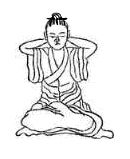
Beating the Heavenly Drum, a popular self massage technique in the Daoist static Dao Yin tradition.
导引 Dao Yin means Leading and Stretching and is a popular form of exercise practiced since pre-dynastic times in China.
The earliest known mention of Dao Yin is in the 南华经 Nan Hua Jing, also known as the Zhuangzi:
吹呴呼吸,吐故纳新,熊经鸟申,为寿而已矣,此道引之士,养形之人,彭祖寿考者之所好也。
“making huffing and puffing sounds when they breathe, spitting out the old and grasping the new, bending their backs like bears and extending their chests like birds, they believe this gives them long life. These practitioners of Dao Yin are people who nurture their bodies and would like to extend their lives to the same length as Peng Zu.”
Zhuangzi outer chapters, Ke Yi chapter.
Although this text is often viewed by modern scholars as a pejorative statement against the practice of stretching and rotating the body, it was used variously throughout Daoist history as evidence of a long tradition of practice in order to legitimate Dao Yin.
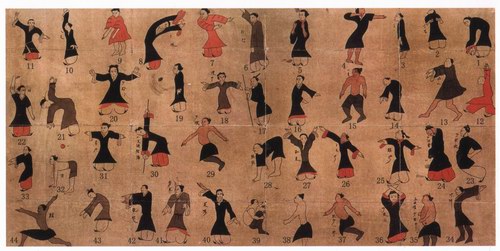
Another early reference is the 导引图 Dao Yin Diagram, a pictorial representation of stretching postures produced sometime during the Warring States period or early Han Dynasty before 220 B.C.
The text was excavated in the mid 20th century at the Han Dynasty Ma Wang Dui Funerary Complex, an archaeological site in Changsha Hunan and was found alongside early Chinese Medicine, Astrology and Breath Work Classics indicating that intellectuals of the time were interested in the study of longevity arts and astrology.
Dao Yin has existed in China in multiple forms over the past 2500 years and is included in Chinese Medicine, Daoism and Folk practice, but today I would like to specifically focus on Daoist conceptions of Dao Yin and discuss the Daoist approach to practice.
A recreation of the Dao Yin Diagram, a famous image depicting stretching exercises found on an archeological dig in South West China.
1: Dao Yin and Massage
The 黄帝内经 Yellow Emperor Internal Classic refers to Dao Yin as 导引按跷 Dao Yin An Qiao/Leading, Stretching, Pressing and Lifting, a Chinese Medicine practice in which acupressure and assisted stretching are used to obtain therapeutic benefits.
We can see that Dao Yin as a concept has historically been treated in diverse ways and is often associated with self massage and therapist assisted massage.
The Sui Dynasty Daoist and Doctor 孙思邈 Sun Simiao recorded the 老子按摩法 Laozi Anmo Fa/Laozi Massage Method, a series of stretching and self massage techniques used to limber up the body as part of his broader collection of self nourishing techniques in his medical corpus.
This highlights Dao Yin as an auto-therapy and active exercise which could be paired with various breathing practices to produce physical relaxation and pain relief.
2: Dao Yin as a static practice
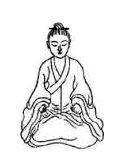
The more common variation of Daoist Dao Yin is performed as a static practice, often done seated.
This practice includes styles such as 十六段锦 Shi Liu Duan Jin/The Sixteen Silk Brocades which are sixteen seated practices which range from seated meditation, posture holding, slight stretching, and self massage and were variously popular in Daoism and folk traditions throughout Chinese history.
Firm Grasping is one of the central meditation techniques of static Daoyin.
3: Dao Yin as a moving practice
The Daoist thinker 陶弘景 Tao Hongjing lived during the Northern and Southern Dynasty period and penned the text 养性延命录 Yang Xing Yan Ming Lu/Nurturing Nature and Extending Life Records in which he presented the 五禽戏 Wu Qin Xi/Five Animal Performances (also known as Five Animal Frolics), a set of moving Dao Yin practices imitating the movements of Monkeys, Bears, Cranes, Deer and Tigers.
This practice involved postures done while standing and crouching and was meant to invigorate and exercise the body to attain ideal circulation of Qi and blood.
4: The two traditions of Daoist Dao Yin
by reviewing the above information we can see that Daoist Dao Yin traditionally included two types of Dao Yin, one performed while seated and with only a very limited number of movements and another performed while standing with more diverse movements.
The purpose of the styles is different since the practice with less movements was usually performed as a means of integrating meditation with self massage, while the method with more movements was designed to stimulate circulation.
These approaches are different in character and produce radically different results, meaning they are both useful to have in one’s Qigong repertoir.
5: Modern adaptations of Daoist Dao Yin
In modern times Daoist Dao Yin practices have been interpreted in new contexts outside of the Daoist tradition leading to arts such as the Five Animal Performances and Eight Silk Brocades being performed at a tempo and style similar to the soft flowing movements of Simplified Taijiquan.
This was partly a result of evolution of the practices among the folk and partly due to Qigong exercise development committees established by the Chinese departments of health and sport.
Until the 1990s Qigong was overseen by the Health department, but today it is controlled by the department of Sport.
This means that standard Qigong routines have evolved over time to resemble dance routines inspired by Taijiquan and bear almost no resemblance to the traditions they emerged from.
This is especially true of modern interpretations of Daoist Dao Yin Methods such as The Eight Silk Brocades which have transitioned from a set of seated exercises performed in stillness to fundamental stretches practiced in a dynamic standing posture.
While there is some evidence that the practice had a Northern variant which was done standing, there is no question that the modern variation of the Eight Silk Brocades has little relationship with the medieval practice of the Sixteen and Twenty Four Silk Brocade Dao Yin practices made popular over 1000 years ago during the Chinese Song Dynasty.
6: Daoist Qigong and Dao Yin
The situation of Daoist Dao Yin is further complicated by the adoption of modern Qigong practices by Daoists at mountains such as Wudang.
Part of the corporate strategy of Daoist tourist locations is to use Taijiquan and Qigong as instructional products to promote Daoist temples.
This business model relies on historical misrepresentation in which the Wudang style of Taijiquan is linked to the Daoist Zhang Sanfeng who lived at the mountain nearly 1000 years ago.
Since the Wudang style of Taijiquan is a combination of the Five Families of Yang Style, Chen Style Old and New Routines, Sun Style, Hao Style, and Wu Style, all of which are modern forms of practice, it is almost impossible that Wudang Taiji could have come directly through Zhang Sanfeng to the mountain without first making several stops in Henan and Beijing over the centuries.
The same is broadly true of Daoist Qigong practice at commercial temples since it borrows from many of the theories of modern Qigong such as the adoption of Taijiquan style movements and the language and terminology of modern Qigong.
At the same time there are still Daoists in China and the Chinese diaspora who practice traditional Daoist Dao Yin Methods and it can be difficult for neophytes and advanced students alike to clearly differentiate what practices are authentic to the Daoist traditions and which ones are derived from post revolution Qigong.
7: Researching Daoist Dao Yin documents may help in clarifying the nature of the genre
Since the modern Qigong marketplace is full of contradictory and confusing information it may be beneficial for people wishing to study and understand Daoist methods to make a literature review of old Dao Yin documents to understand the type of practices used in the genre.
This can be paired with the study of modern Qigong theory to help verify where changes have taken place.
This is a difficult task even for fluent Chinese readers since most medieval Daoist documents are written in terse and coded language, but it could have great benefit in moving the genre forward in the west.
Conclusion
Qigong Project is dedicated to the research and dissemination of accurate information about Qigong in all of its forms.
One of our greatest interests is Daoist Dao Yin practice and we plan to offer courses in Dao Yin document reading starting mid November which will be available as premium content on this site.
We believe that by clarifying the history, theory, and components of traditional Qigong it is possible to create a non superstitious and more beneficial understanding of the practice of Qigong and improve the community.
Thank you very much for reading this article, I hope you found it useful!
One-Time
Monthly
Yearly
Please consider making a one-time donation to Qigong Project
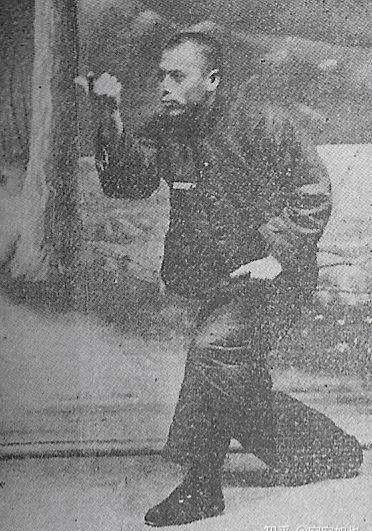
薛颠 Xue Dian was a 20th century Xingyi master who had great skill. He also created an entire set of energetic and spiritual practices, many of which were lost in the cultural revolution. Luckily his Xingyi book and his method of Dantian breathing still exist. Xue can be said to have had great 功 Gong.
There is an old Martial Arts proverb:
练拳不练功到老一场空
If you practice Martial Arts without refining skill in old age it will all be in vain.
One of my main jobs at Qigong Project is to promote genuine Qigong and a major part of this is in explaining what is not Qigong.
The above quote has been used for decades by Qigong teachers who also practice Martial Arts (especially Taijiquan) to claim that Taiji practitioners must also practice Qigong.
This isn’t just a Western thing, it is also quite a common idea in China, but it is a serious misinterpretation of what the term 功 Gong/Skill means in the Martial Arts.
The term Gong is made up of two halves:
工 Gong/Work: This denotes putting work into a skill over time so it matures.
力 Li/Strength: This denotes the use of your physical and mental powers to perform work.
Together Work and Strength produce Skill, which is the meaning of Gong.
We shouldn’t make the mistake of assuming that strength refers only to physical power in this case, or that strength is the only important part of martial arts, since of course we also need speed, flexibility, dexterity, perceptual skill and many other attributes to be good martial artists, so strength in this sense means how much effort we put into practice every day.
Thus the saying “if you practice martial arts without refining skill in old age will all be in vain ” means that if you only practice martial techniques and you do not work on practices that improve the other attributes of practice you will not be able to maintain your martial ability as you get older.
You might ask, what is martial skill practice then, and what does it have to do with Qigong?
This is a good question because it brings us into the territory where we can actually get a sense of what Martial Arts Qigong really is and isn’t.
Martial Skill is anything which serves the purpose of martial training and in the context of Chinese Martial Arts Culture there are several characteristics that make up skill:
Self defense skill: the ability to defend yourself is the main purpose of martial arts so any good martial artist must know how to apply their art against an attacker.
Physical and mental development: the attributes of strength, speed, flexibility, stamina, dexterity, mental acuity, physical relationship with opponents etc… are all aspects of physical development. Although self defense is the primary objective of martial arts, physical and mental development are the main way to obtain those skills.
Physical and mental health: Chinese Martial Arts often place emphasis on attaining physical and mental wellbeing as a result of correct practice. The goal of martial arts is not to become a champion and retire at 32 unable to walk properly, it is to practice until you are in old age and enjoy the joy that strength, speed, flexibility, dexterity and mental acuity provide you when most other people are in decline.
Performance: many martial “realists” don’t like the idea of performative aspects of Chinese Martial Arts, but they have always been part of the practice and serve several important functions such as appraisal of basic skills, verification of lineage, and of course as a beautiful performative art form that is aesthetically pleasant to watch. Performance quality relies on strength, speed, flexibility, dexterity, mental acuity, and expressiveness.
Thus you can see that among each of the categories listed above it is those qualities of strength, speed, flexibility, dexterity and mental acuity that define the skill set of the martial arts regardless of which dimension of practice is under consideration.
So how are those things trained? I thought you were going to tell us about martial Qigong?
Those skills are trained in the following ways:
基本功 Jiben Gong/Foundational Skills: punching, kicking, blocking, practicing force and speed exercises, and repetitive single movements all qualify as basic skill cultivation.
内功 Nei Gong/Inner Skill: stretching, rotating joints, relaxing muscles, posture work, all of these things comprise the requirements we need to have an elastic, strong and healthy posture and good movement dynamics.
外功 Wai Gong/External Skill: strength and speed conditioning, running, lifting weights, doing sit ups, push ups, pull ups and other similar practices build raw power, speed and stamina needed to practice martial arts at a high level.
Other Methods: routine practice, weapons, partner work and many other elements also inform our skill development.
Where Qigong fits:
In the Martial Arts there are two practices which can be understood as Qigong, the first is Neigong which is the stretching and relaxing practice mentioned above and the other is art specific Qigong which develops the internal energy of practitioners to help them enhance their vitality, recover from training injuries, focus their minds and of course realize their energetic potential.
Neigong is taught to all practitioners whereas Qigong is sometimes kept as a lineage secret or advanced practice only available for disciples.
It is also common for Qigong to be taught to harden the body such as in the practice of Iron Fist and Iron Body.
Martial Arts Qigong is quite complex since it is usually adopted to meet the requirements of specific styles, so the Qigong practiced by Taijiquan practitioners might be used to advance attributes such as softness and subtle movement while Shaolin Qigong often emphasizes strengthening deep muscles around joints in order to provide more power and toughness.
In old times Martial Qigong was typically referred to as Neigong and only since the rise of Qigong culture in the 1950s has the term Qigong been used in the Martial Arts.
This has been complicated by the similarity of classic methods like Ba Duan Jin and Yi Jin Jing to non martial variations of the same arts.
It is only in modern times that we call Ba Duan Jin or Yi Jin Jing as Qigong, actually before the 1950s that term was never used to describe those arts and they would only have been called Neigong if it was specifically applied within the context of the Martial Arts.
Another problem has come up with the adoption of modern Qigong methods into arts such as Taijiquan. When I first started studying Middle Frame Yang Style from Shen Zaiwen’s lineage my teachers and classmates would often say that practicing Shen’s Taiji Qigong set was required to be good at Taijiquan practice, but later when I learned the same style from Yin Qin in Shanghai he taught a completely different approach in which Dao Yin was a major feature of practice taught to indoor disciples but where the energetic results of practice came from proper movement, posture, breathing and basics during regular form practice.
I’m not trying to say one is right and one is wrong, but rather where the Gong is located varies between styles.
Shen Zaiwen’s Taiji is mainly a health practice and Yin Qin likes to poke people in the eyes and throw them on the floor so of course their interpretations are different.
Summary:
To sum up my thoughts, if you have come to this site and already have high context about the nature of Qigong as a modern phenomenon then none of this will have been new news to you. I suspect you may think that I missed important points and that you have your own take which may vary considerably from mine and that’s to be expected.
However, many people practice Qigong for a very long time without ever really looking into the complexity of the genre and often come off with wildly inaccurate ideas about what it is, where it is useful and how it is applied.
My take based on twenty years of practice and reasonably diligent research is that the word Qigong is often poorly defined even in China and is often used in a procrustian way that only adds confusion to the public discussion about these arts.
My current understanding is that pretty much every type of Dao Yin, Neigong, and breathwork that existed before 1955 was not originally called Qigong and so now that modern Qigong has had such a large impact it often seeps into places where it doesn’t really belong.
That is to say that Martial Arts Qigong which doesn’t serve martial purposes isn’t really Martial Arts Qigong, it is some other kind of Qigong.
Just so, Daoist Qigong which doesn’t emphasize a Daoist approach isn’t Daoist Qigong, Chinese Medicine Qigong without fundamental understanding of Chinese Medicine theory isn’t Chinese Medicine Qigong and so on.
This might be a lot to take in right now, but trust me once this site is better developed I’ll be backing this up with a lot of evidence.
The biggest category of Qigong is modern qigong of which there are hundreds of styles. Most Qigong is modern Qigong and in my opinion it is better than almost any other kind of Qigong because it has its own specific use and ideology which other schools tend to miss out on.
Having said that if you are looking for specific results such as attaining the Dao or healing from illness then you might be better suited to other variations of Qigong.
Just so, if you want to be a great martial artist and know how to defend yourself, have a strong and flexible body and keen mind, keep your skill in old age and maintain vitality all while looking cool doing it, then you better keep working on your Gong and don’t just do forms and applications, otherwise it will all come to nothing as the adage says.

 Qigong Project